
Strategic Negotiations: Dealmaking for the Long Term


Rethink how you negotiate and reach a winning deal.

Rethink how you negotiate and reach a winning deal.



What You Will Learn
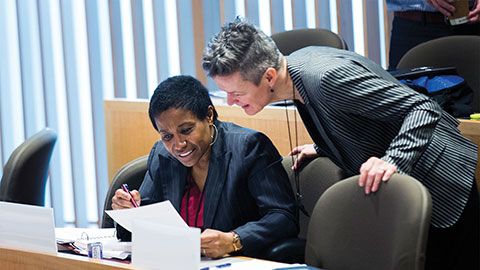
Immersed in a rich and focused learning experience that includes faculty presentations, group discussions, and case studies, you will explore how the world's best dealmakers plan and navigate complex negotiations. Through an in-depth examination of the three dimensions of negotiating, you will learn how to weave together a series of mutually reinforcing decisions and activities to drive optimal results.
You will also participate in interactive simulations—beginning with simple two-party deals and moving to complex, multi-party, multi-issue negotiations—which bring to life the importance of strategic planning
Participants should expect to spend at least 9-12 hours on self-paced case preparation prior to attending the program. Case materials will be made available approximately two weeks prior to program start.
-
What You Will Learn
-
Immersed in a rich and focused learning experience that includes faculty presentations, group discussions, and case studies, you will explore how the world's best dealmakers plan and navigate complex negotiations. Through an in-depth examination of the three dimensions of negotiating, you will learn how to weave together a series of mutually reinforcing decisions and activities to drive optimal results.
You will also participate in interactive simulations—beginning with simple two-party deals and moving to complex, multi-party, multi-issue negotiations—which bring to life the importance of strategic planning
Participants should expect to spend at least 9-12 hours on self-paced case preparation prior to attending the program. Case materials will be made available approximately two weeks prior to program start.
Key TopicsCollapse All
The first dimension: maximizing effectiveness at the tableThe first dimension: maximizing effectiveness at the table
One-dimensional (1D) negotiators seek interpersonal effectiveness, whether in person, by email, or on the phone. They focus on elements of the immediate negotiating process, such as:
- Employing the most appropriate bargaining styles
- Creating the right atmosphere and setting communication dynamics
- Building trust
- Framing issues attractively
- Persuading others
- Deciphering body language
- Bridging cultural differences
The second dimension: engineering the dealThe second dimension: engineering the deal
Two-dimensional (2D) negotiators relentlessly look beyond the interpersonal process to the underlying substance of the problem, identifying where potential value exists and how to build agreements that realize this value for both sides. They focus on the principles of deal-crafting—the engineering of value creation among potentially cooperative parties.
The third dimension: designing the processThe third dimension: designing the process
Three-dimensional (3D) negotiators know that once the bargaining table has been set, much of the game already has been played. They think hard about the architecture of the deal—how to set up and, if necessary, reset the table. Not only do 3D negotiators skillfully play the game as given, but they also act entrepreneurially on multiple planes to change the game and gain maximum advantage. They focus on issues such as:
- Who should be at the table? What is the best means to get them there? In what sequence and on what basis should they be approached?
- What set of issues should be discussed? Is it most productive to separate or combine issues?
- Which process is best?
- How should expectations be set?
- What are the no-deal alternatives?
- Should there be a series of tables, possibly linked, separated, sequenced, or arranged in parallel?






Rethink how you negotiate and reach a winning deal.
Rethink how you negotiate and reach a winning deal.