
Custom Programs
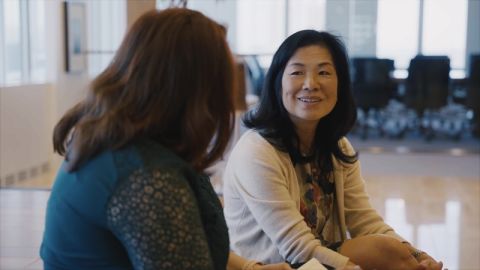
A learning experience built around your business goals.
HBS helps you design customized learning experiences that transform individual leaders, teams, and organizations. Our expert team will partner with you to codesign learning experiences directly linked to your organization's unique learning and business goals.
With this in mind, we deliver your program in a variety of formats that typically include virtual and in-person delivery options. The curriculum is similar for both options, but tailored to take advantage of each delivery method.
We carefully structure the cadence of your virtual sessions with faculty and your team to create a balance between live, interactive learning and time for individual reflection.
- Prior to each day of learning, participants work in discussion groups that are scheduled with careful attention to time zones, facilitating preparation for faculty-led discussions and leveraging peer learning.
- Peer engagement is reinforced through discussion groups, polls, chats, videos, and cold calls.
- Small-group opportunities provide a basis for building peer-to-peer relationships—and a network for solving individual and organizational challenges in the future.
- Case-Based Learning
- Peer Coaching
- Experiential Exercises
- Leadership Assessments
- Industry Panels
- Interactive Lectures
- Application Workshops
- Coaching
- Digital Simulations
- Small-Group Discussions
- Action Learning Projects
- Executive Panels
- Case-Based Learning
- Peer Coaching
- Experiential Exercises
- Leadership Assessments
- Industry Panels
- Interactive Lectures
- Application Workshops
- Coaching
- Digital Simulations
- Small-Group Discussions
- Action Learning Projects
- Executive Panels
Each component of a custom program is considered carefully in the context and duration of your program, your organizational culture, and the most effective way to deliver content to your executives.
-
A learning experience built around your business goals.
-
HBS helps you design customized learning experiences that transform individual leaders, teams, and organizations. Our expert team will partner with you to codesign learning experiences directly linked to your organization's unique learning and business goals.
With this in mind, we deliver your program in a variety of formats that typically include virtual and in-person delivery options. The curriculum is similar for both options, but tailored to take advantage of each delivery method.
We carefully structure the cadence of your virtual sessions with faculty and your team to create a balance between live, interactive learning and time for individual reflection.
- Prior to each day of learning, participants work in discussion groups that are scheduled with careful attention to time zones, facilitating preparation for faculty-led discussions and leveraging peer learning.
- Peer engagement is reinforced through discussion groups, polls, chats, videos, and cold calls.
- Small-group opportunities provide a basis for building peer-to-peer relationships—and a network for solving individual and organizational challenges in the future.
A custom program may include a variety of distinctive teaching styles and methodologies, such as:- Case-Based Learning
- Peer Coaching
- Experiential Exercises
- Leadership Assessments
- Industry Panels
- Interactive Lectures
- Application Workshops
- Coaching
- Digital Simulations
- Small-Group Discussions
- Action Learning Projects
- Executive Panels
- Case-Based Learning
- Peer Coaching
- Experiential Exercises
- Leadership Assessments
- Industry Panels
- Interactive Lectures
- Application Workshops
- Coaching
- Digital Simulations
- Small-Group Discussions
- Action Learning Projects
- Executive Panels
Each component of a custom program is considered carefully in the context and duration of your program, your organizational culture, and the most effective way to deliver content to your executives.
"I would put our leadership development efforts up against those of any company in
the world. Without HBS, I would not be able to say that."
Scott Northcutt, Senior Vice President, Human Resources, Bacardi Limited
"When you think of building competencies and capabilities—and incentivizing the best
possible talent—you need to tackle that in a very serious way, with the best possible
partner. I am convinced that HBS Executive Education is the best partner."
Jorge Mario Velasquez, CEO, Grupo Argos
-
Client reflections on their custom program experience
-
"I would put our leadership development efforts up against those of any company in the world. Without HBS, I would not be able to say that."
Scott Northcutt, Senior Vice President, Human Resources, Bacardi Limited"When you think of building competencies and capabilities—and incentivizing the best possible talent—you need to tackle that in a very serious way, with the best possible partner. I am convinced that HBS Executive Education is the best partner."
Jorge Mario Velasquez, CEO, Grupo Argos
The HBS faculty chair and program director partner with your organization throughout the entire process of design and delivery. This includes conducting needs assessment interviews with key stakeholders and a review of organizational challenges and competencies.


-
A collaborative approach to designing your program
-
The HBS faculty chair and program director partner with your organization throughout the entire process of design and delivery. This includes conducting needs assessment interviews with key stakeholders and a review of organizational challenges and competencies.